
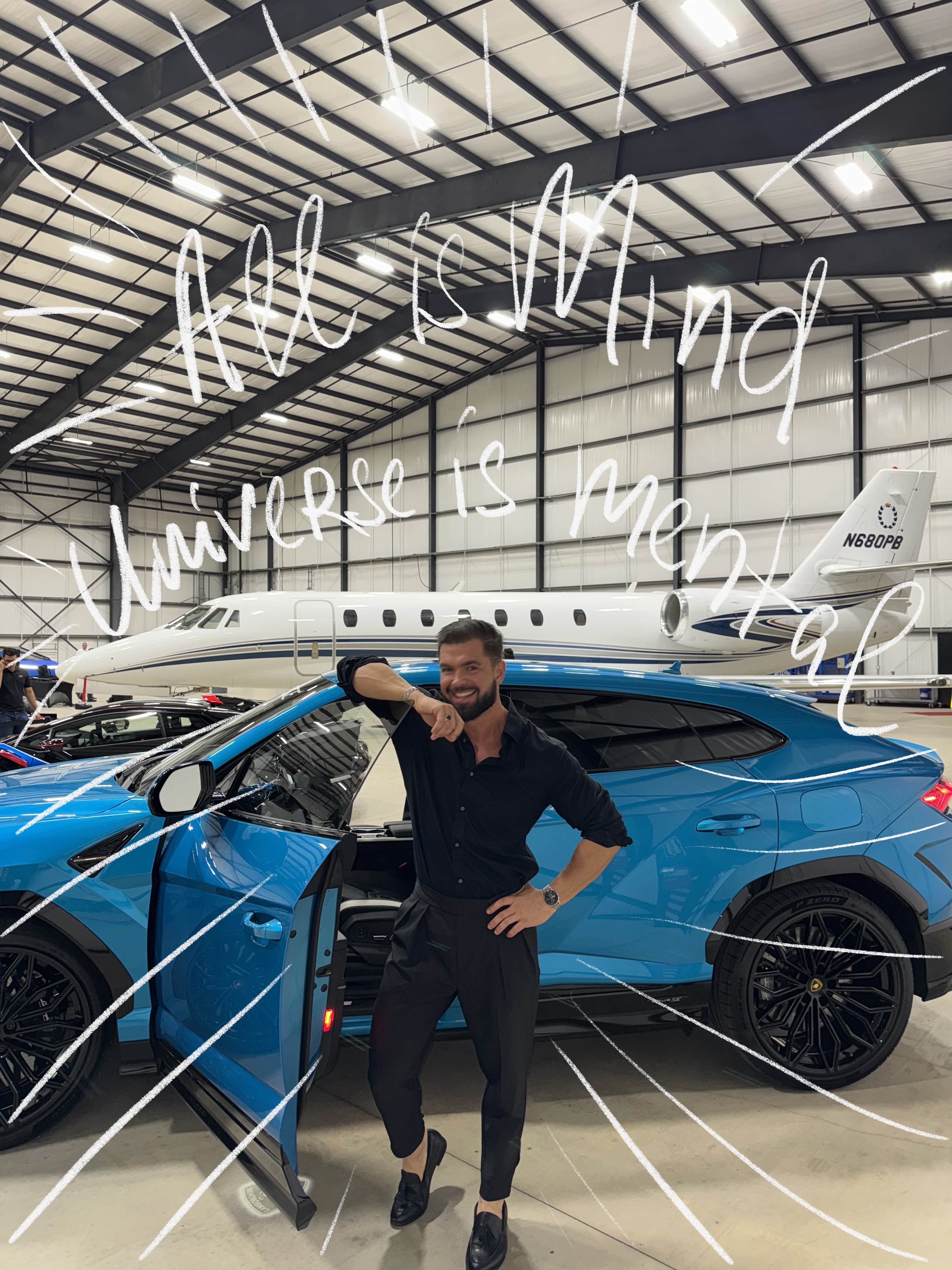
I started my first company at 17 in Ukraine.
Most of my business education came from finding customers, delivering work, and living with the consequences of my decisions. Events. Commercial production. Software sales. Automotive. Retail. General construction. Each industry gave me a different way to understand how ideas become something real.
After moving to the United States, I built a car-hauling operation. I drove and dispatched myself before growing into managing a fleet of trucks, drivers, mechanics, and daily operations. Along the way, we developed a custom load board and AI-driven dispatch agents.
I learned by getting involved, taking responsibility, and figuring things out as I went.
I also made mistakes.
It would be easy to tell this story only through what I built. But some of the most valuable lessons came from recognizing where my own decisions, assumptions, and reactions needed to change.
Sometimes the hardest person to be honest with is yourself.
The biggest lesson has been accountability.
My intentions don’t erase the impact of my actions. When I get something wrong, my responsibility is to acknowledge it, repair what I can, and carry the lesson into what I do next.
I’m learning to notice how quickly my mind looks outward for an explanation. Bringing that attention back to myself takes practice. What am I assuming? Have I communicated clearly? Am I responding to what is happening, or to a story I’ve built around it?
I can’t control another person or guarantee an outcome. The place where I can exercise responsibility is my own mind—and the actions that follow from it.
That doesn’t mean I can command every thought or never feel fear, frustration, or doubt. It means practicing the ability to notice those experiences without letting them make every decision for me.
Do my best. Be honest about where I fall short. Take responsibility for the next action.
That’s what clear signal means to me.
Behind every business is a human operating system.
Attention. Beliefs. Habits. Identity. Patterns that influence decisions long before we become aware of them.
These questions now occupy much of my curiosity. They’re also the foundation of the Human Operating Manual, an evolving project shaped through writing, conversation, and personal experimentation.
AI adds another dimension:
If intelligence becomes abundant, what becomes uniquely valuable about being human?
An answer can arrive instantly. Choosing a question worth pursuing still takes judgment. Extraordinary tools can expand our abilities, but they don’t decide what deserves our lives.
My current bet is attention, curiosity, self-command, creativity, and real connection.
Connection starts with the quality of our presence.
A conversation changes when there’s less need to impress, defend, or prepare the next sentence. More becomes possible when curiosity has room to breathe.
Trust grows through ordinary actions: speaking honestly, following through, admitting uncertainty, and taking responsibility when something goes wrong.
Making complex ideas tangible is where this meets my work.
Through Global Venture Builder and W Benefits, the focus is turning deep science and strategy into something people can understand, feel, and use.
My contribution often begins with a practical question: Where does this fit into someone’s life?
With W Benefits, we’re exploring whether familiar routines can become ways to deliver additional health benefits, starting with oral care. The work moves between imagination and execution, with constant opportunities to listen, test assumptions, and adjust.
Human 2.0 means becoming more complete.
Thought, feeling, body, imagination, and action—all participating in the same life. Discipline to follow through. Humility to change direction. Enough openness to keep discovering.
Oneness sits underneath this exploration: the experience of belonging to a shared whole, expressed through the way we treat each moment and each other.
That perspective brings responsibility home. Every interaction offers a chance to examine what we’re contributing. Every mistake offers something to understand and an opportunity to act with greater awareness.
There’s no finished philosophy here. These ideas are still being tested in my own life.
The game of life provides plenty of practice: build something, meet someone, notice a pattern, get it wrong, begin again.
Bring your full attention. Take responsibility for your moves. Leave room for surprise.
What’s occupying your mind these days?
Let’s play.