
Where Are You Coming From, and Where Are You Going?
On the anxiety of introductions, the collapse of old identities, and the forgotten art of meeting another human being.
There is a peculiar anxiety that many of us experience just before meeting someone new.
A dinner party. A gathering of strangers. A business meeting. Two people standing beside each other, searching for a way to begin.
We smile. We exchange names. And then, almost inevitably, comes the question:
“So, what do you do?”
Such an innocent question.
And yet, how much of our civilization is hiding inside those five words?
We have become remarkably skilled at reducing the complexity of a human life to a profession, a title, a company, or an achievement.
I’m a lawyer. An entrepreneur. An artist. A doctor. A consultant.
Within seconds, we have offered another person a convenient little box in which to place us.
And without necessarily intending to, we have invited them to evaluate our position in the world before discovering anything meaningful about who we are.
What an extraordinary way to meet a human being.
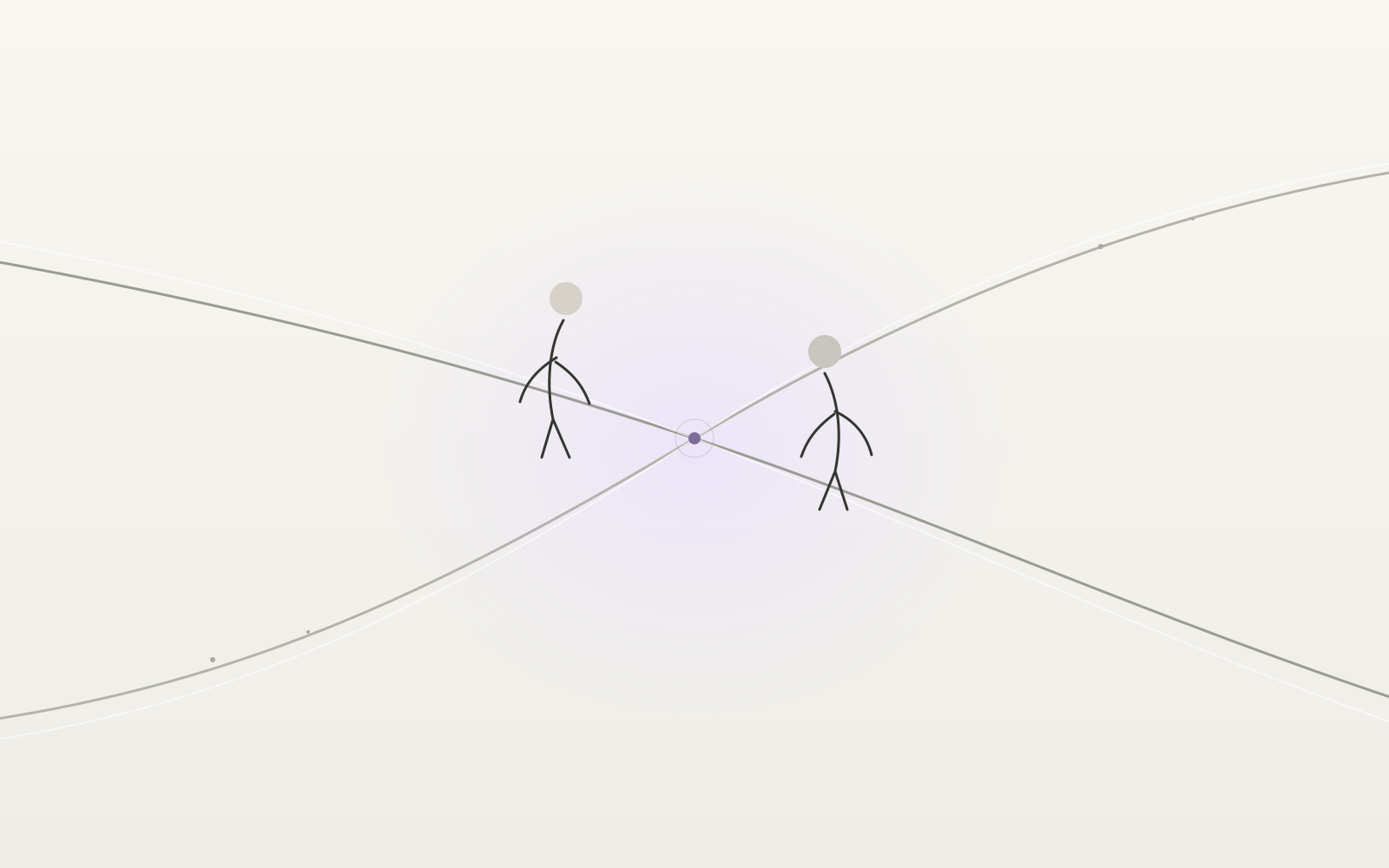
The invisible interview
Consider what happens inside us when someone asks what we do.
For some, the answer comes easily. Their profession provides a stable identity, social recognition, and a sense of belonging.
For others, the question activates something less comfortable.
What if I’m between careers?
What if I left behind everything I spent twenty years building?
What if I’m still discovering what I want to do?
What if my work has nothing to do with what makes me feel alive?
What if I’m becoming someone I don’t yet have the words to describe?
Suddenly, a simple introduction becomes a miniature examination.
We are no longer just meeting another person.
We are preparing a defense of our existence.
And perhaps the strangest part is that nobody necessarily intended to create this discomfort.
We simply inherited a social ritual without questioning what it was designed to discover.
When the old answers stop working
Something unusual is happening to our sense of identity.
Technologies are transforming professions. Artificial intelligence is challenging assumptions about intelligence, creativity, and human labor. Social institutions are being questioned. People are reconsidering relationships, success, education, and the meaning of a good life.
Changes that once unfolded over generations can now become visible within years, sometimes months.
We are living through an extraordinary convergence of events, where the stories people once used to explain their lives may no longer describe the lives they are actually living.
A person can be a successful executive on Monday and decide to become a farmer on Friday.
A scientist can become an artist.
An entrepreneur can abandon a profitable business to spend time with their children.
Someone can lose everything they believed defined them and discover, perhaps for the first time, that they are still here.
Still breathing.
Still curious.
Still capable of love, imagination, and creation.
Who are these people?
Their former titles won’t tell us.
And perhaps their new titles won’t either.
We have entered an age in which the question “What do you do?” can become increasingly inadequate.
Not because work has lost its value.
But because a human being has always been infinitely more interesting than their economic function.
A different way to meet
A friend once shared an observation that stayed with me, framing it as an invitation inspired by Indigenous wisdom. I don’t present it as a greeting shared by every Indigenous culture or community; I offer it as one person’s phrasing that stayed with me:
“Where are you coming from, and where are you going?”
I fell in love with the invitation hidden inside those words.
Notice how differently they feel.
Where are you coming from?
Not necessarily a geographical location.
Perhaps a childhood. A difficult year. A beautiful experience. A loss. A discovery. A long journey through uncertainty.
And where are you going?
Perhaps toward something you have dreamed about for decades.
Perhaps toward a new understanding of yourself.
Perhaps you don’t know yet.
And that is a perfectly beautiful answer.
Unlike a professional title, these questions don’t demand that a person arrive with a finished identity.
They invite a story.
They allow movement.
They recognize that a human being is not a fixed object to be classified, but a living experience unfolding through time.
And most importantly, they create room for curiosity before judgment.
The difference between curiosity and evaluation
There is a profound difference between asking a question to understand someone and asking a question to determine their value.
We can feel that difference.
Sometimes before a single word is spoken.
It lives in the quality of someone’s attention.
Are they listening to discover something?
Or waiting for enough information to decide whether we are worth their time?
Are they interested in our experience?
Or searching for a familiar category?
Of course, asking someone about their work can be a wonderful beginning. Work can express devotion, creativity, service, and purpose.
The problem begins when we confuse what someone does with what someone is.
A person may spend eight hours a day repairing roofs and the rest of their life exploring philosophy, raising children, studying the stars, or quietly caring for their community.
Which part of that person deserves our curiosity?
All of it.
And yet our conventional introductions often stop at the roof.
The courage to meet without a mask
Imagine arriving at a gathering without feeling the need to impress anyone.
No rehearsed biography.
No carefully arranged credentials.
No invisible competition over success, status, wealth, or influence.
Just two human beings, genuinely interested in discovering each other.
One asks:
“Where are you coming from?”
And the other begins to share.
Not necessarily their entire life story. Perhaps just what brought them here today. What they’ve been learning. What has recently changed the way they see the world.
Then comes the second question:
“Where are you going?”
And suddenly the conversation opens toward possibility.
What are you curious about?
What are you trying to understand?
What would you love to create?
What kind of person are you becoming?
These are not questions that require impressive answers.
They require presence.
And presence changes the nature of a meeting.
Because when someone feels genuinely heard, they may no longer need to perform.
They can simply be.
Trust is not guaranteed by a beautiful question. It develops through consistency, respect, and time.
But genuine curiosity can create the conditions in which trust begins.
We are not our biographies
Perhaps one of the most liberating realizations available to a human being is that our identity does not have to remain loyal to our history.
Our past matters.
It has shaped us, taught us, wounded us, strengthened us, and brought us to this extraordinary moment.
But it is not the entirety of who we are.
Neither is our profession.
Neither is our reputation.
Neither is the version of ourselves that other people have grown accustomed to recognizing.
We are allowed to change.
We are allowed to discover new interests, new capacities, new ways of loving, living, and contributing.
We are allowed to become beginners again.
And we are allowed to meet one another without demanding a completed explanation.
Maybe that is what makes these two questions so meaningful.
One honors the journey that brought us here.
The other honors the freedom to continue.
A new social ritual
I wonder what would happen if we began changing the way we introduce ourselves.
Not through another complicated social philosophy.
Just through a little more awareness.
The next time we meet someone, perhaps we could resist the automatic urge to ask what they do.
Instead, we might ask:
“What has life been teaching you lately?”
“What brought you here?”
“What are you excited about these days?”
Or simply:
“Where are you coming from, and where are you going?”
And then do something increasingly rare.
Listen.
Not to prepare a response.
Not to identify an opportunity.
Not to decide whether this person belongs in our network.
Listen because another human being is sharing a small piece of an experience that has never existed in exactly the same way before.
A life.
A perspective.
A universe of memories, possibilities, contradictions, and dreams.
Perhaps we would discover that the stranger standing in front of us is not so strange after all.
Perhaps we would find something familiar in their uncertainty, something beautiful in their courage, something inspiring in their curiosity.
Perhaps we would remember that we are not here merely to exchange credentials, compare achievements, and negotiate our places in the world.
We are also here to experience one another.
To learn.
To create.
To belong.
And sometimes, to meet a person whose story changes the direction of our own.
So the next time we meet, please don’t feel obligated to tell me what you do.
Tell me what makes you feel alive.
Tell me what you’re discovering.
Tell me where you’ve been, and what calls you forward.
And if you don’t know where you’re going yet, that’s wonderful too.
We don’t have to know our destination to recognize the beauty of traveling together.